

SHEET MODIFICATION
Thomas Panels and Profiles offer a wide range of sheet modification services for our trapezoidal and corrugated roll-formed sheeting, allowing products to be tailored precisely to the structural and architectural requirements of each project.
Using advanced manufacturing processes, we can produce sheeting to custom lengths, angles, radii, and project-specific profiles, providing flexibility for both standard builds and complex roof geometries.
Our modification capabilities help reduce on-site adjustments, improve installation efficiency, and ensure consistent performance across roof and wall applications.
Trapezoidal Sheeting
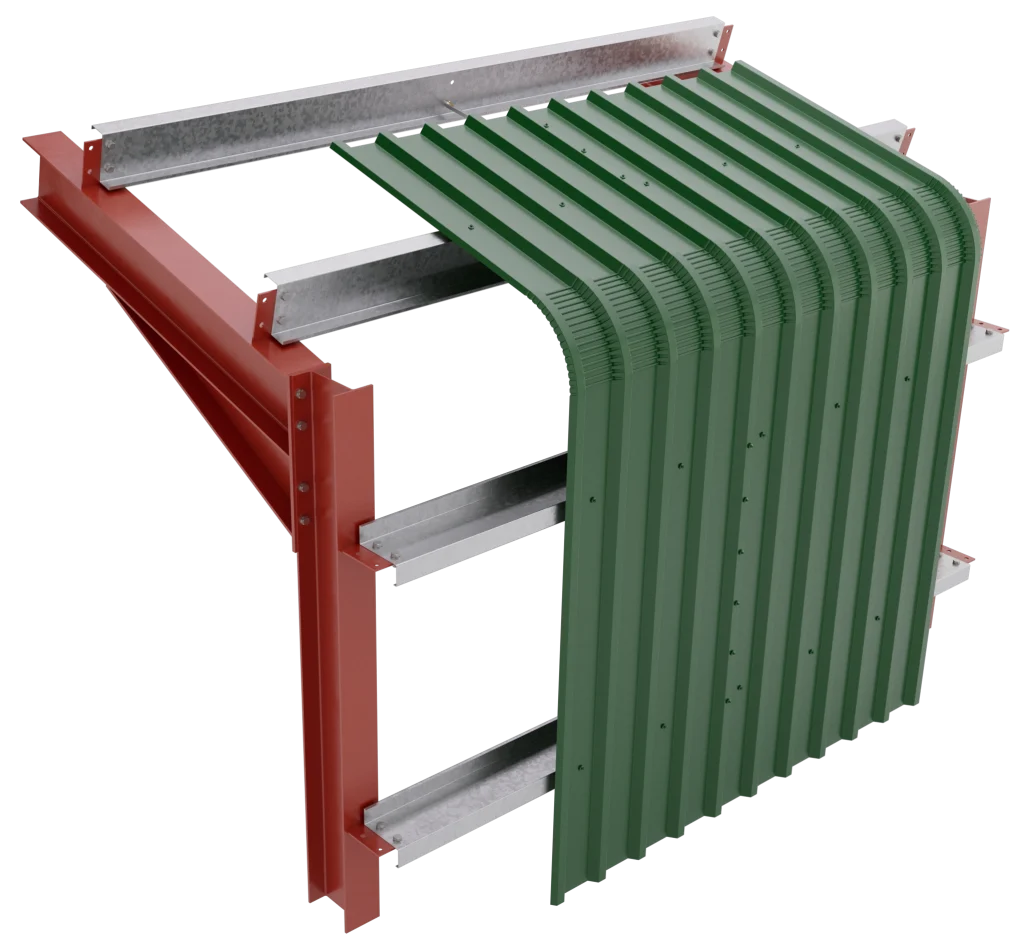
CRIMP CURVING
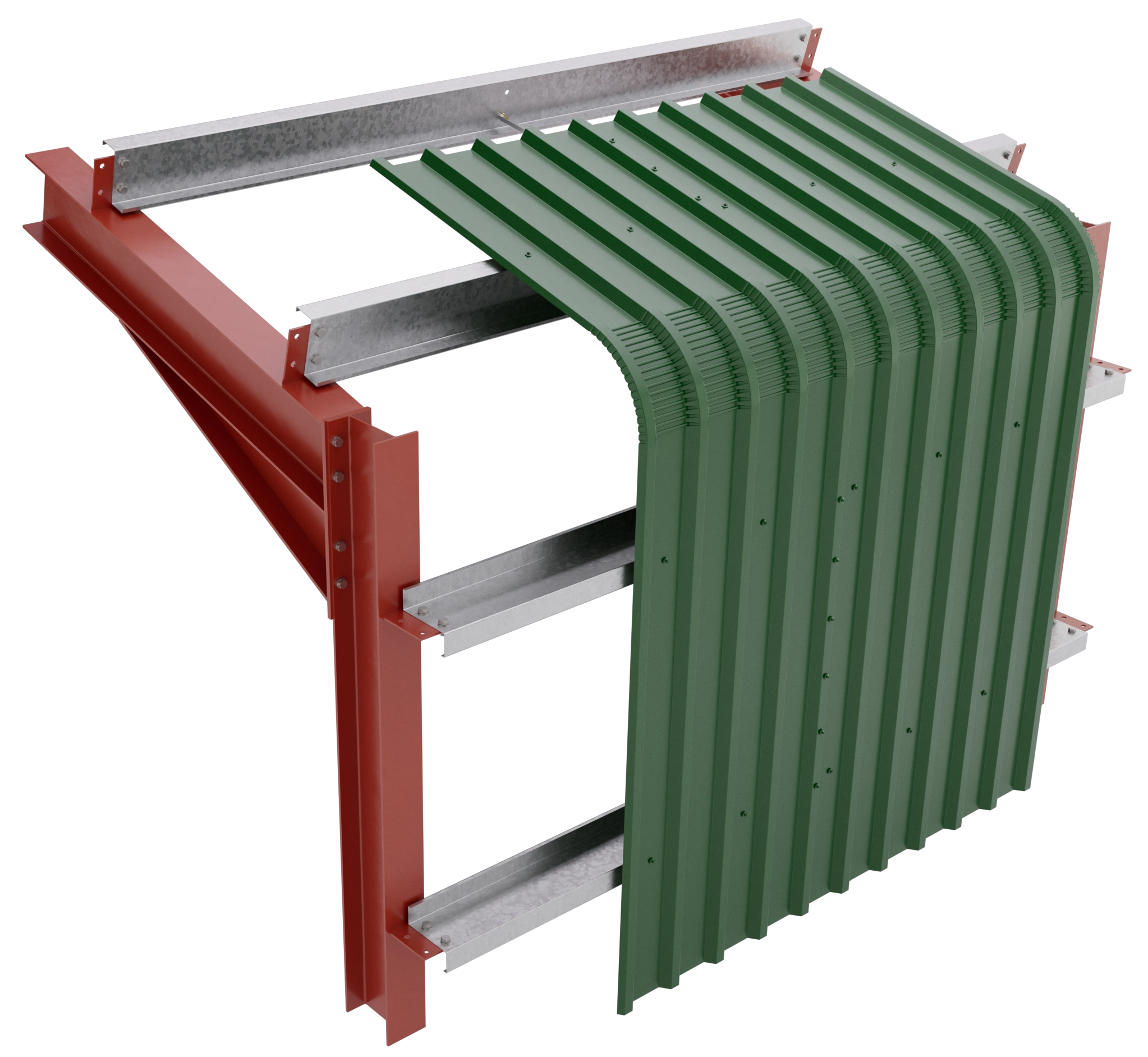
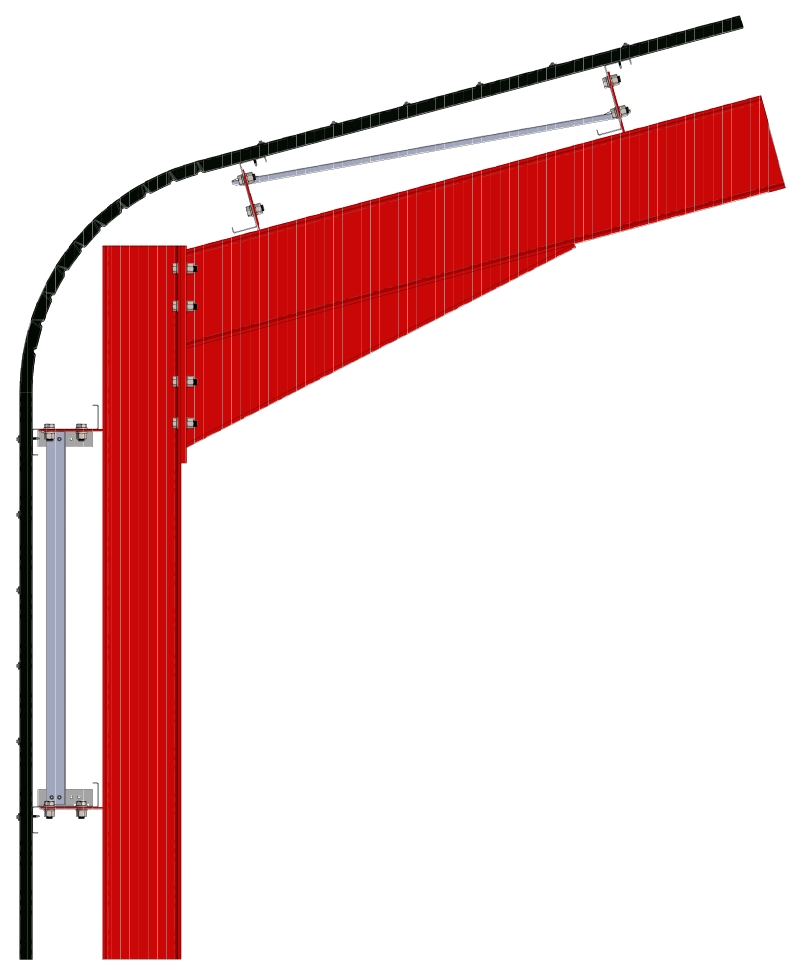
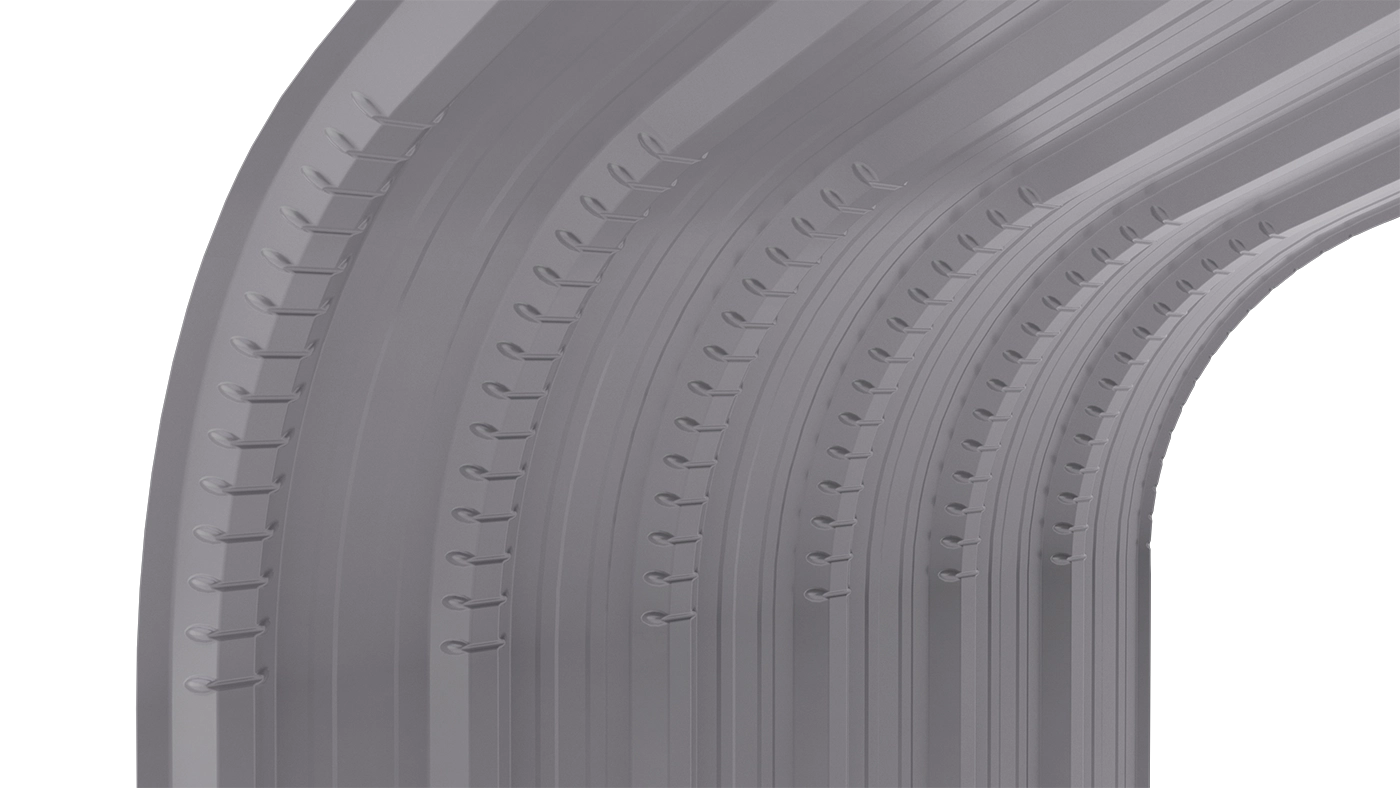
Crimp curving is available exclusively on trapezoidal profiles, enabling sheets to follow a curved roof form by introducing controlled crimps along the length of the sheet.
This method allows buildings to achieve a continuous curved structure without the need for traditional eaves gutters. Instead, rainwater can be directed into a French drain system, simplifying the roof edge detail and reducing maintenance associated with external guttering.
A key advantage of crimp-curved trapezoidal sheeting is the seamless external appearance, creating a smooth transition from roof to wall with minimal visual interruption. This continuous envelope not only enhances the architectural finish but also reduces potential leak points typically associated with junction details.
Crimp curving is also widely used for liner panels, where sealing the internal face of the structure is critical. In environments such as the poultry industry, crimp-curved liner sheets help create a more enclosed and hygienic internal surface by reducing gaps at eaves and corners.
This assists with wash-down procedures, improves biosecurity, and helps maintain controlled internal conditions.
Profiles available for Crimp Curving
1000-32 FORWARD (with or without ribs)
1000-20 TYPE 1
1000-20 TYPE 2
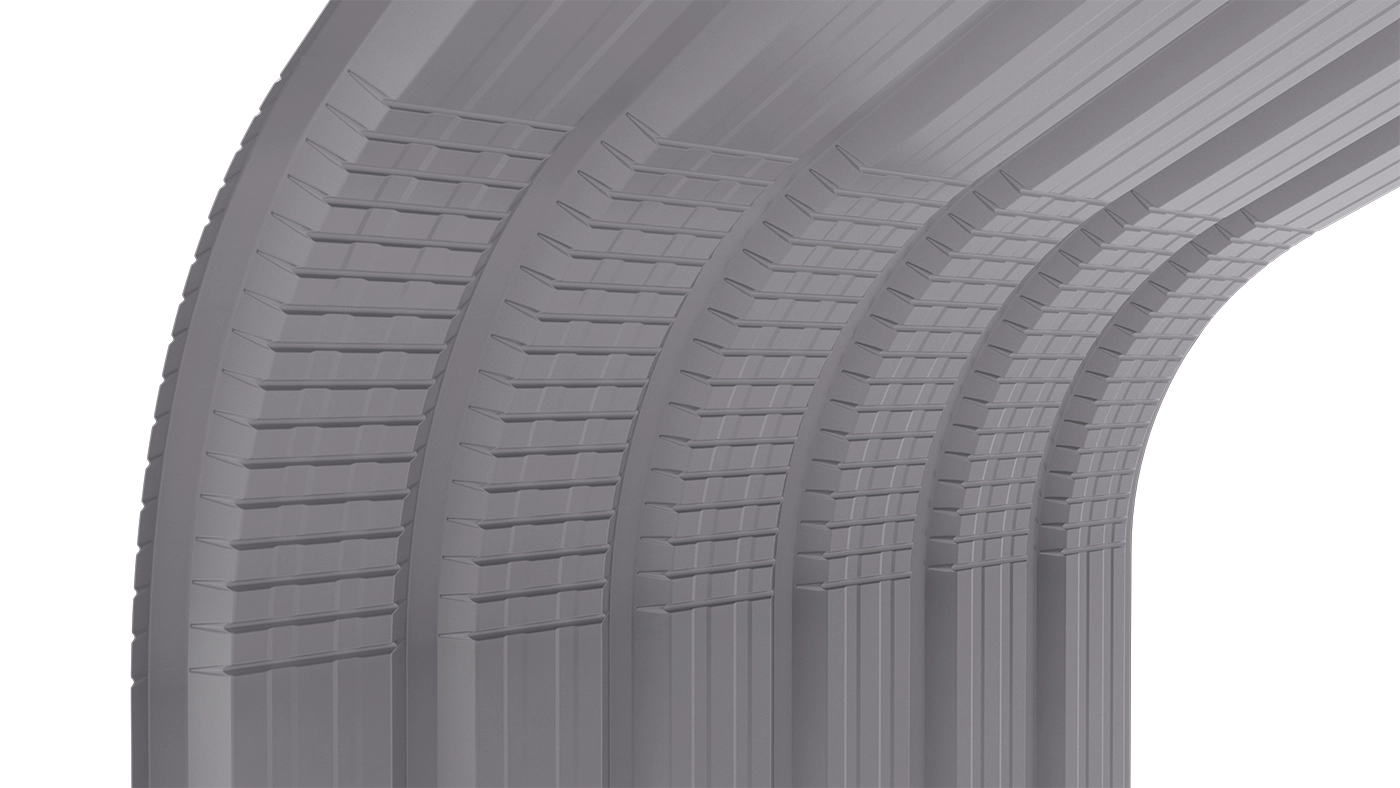
Sheeting
SMOOTH
CORRUGATED CURVING
Smooth curving is available on corrugated profiles, producing a continuous radius without visible crimps.
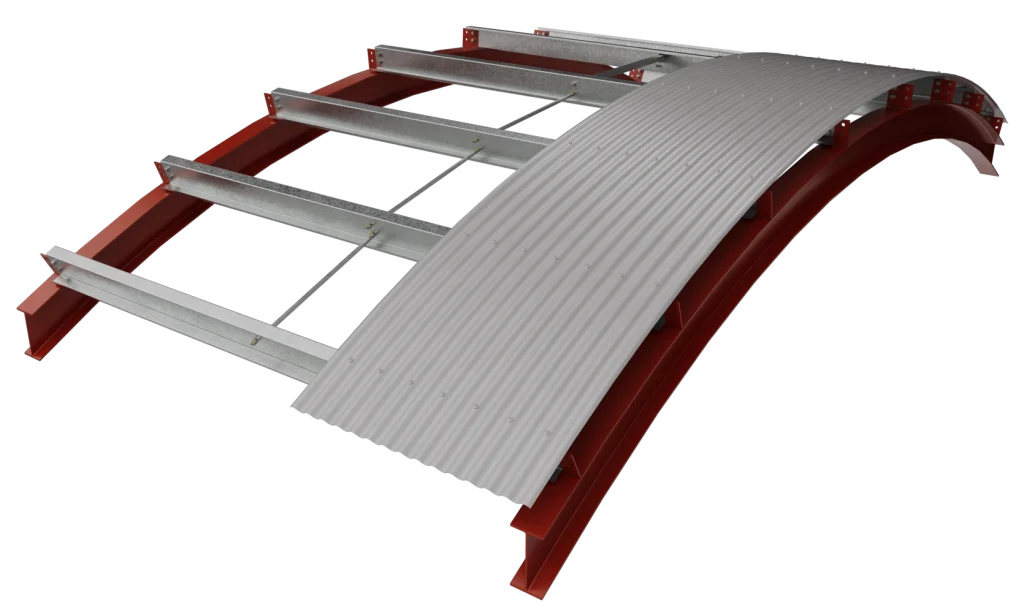
This process delivers a clean, flowing aesthetic while maintaining the strength and flexibility of the corrugated sheet.
Smooth-curved corrugated sheeting is ideal for architectural features or curved façades where visual appearance is a priority, while still providing effective weather protection and durability.
Profiles available for Smooth Corrgated Curving
14-3 Corrugated
13.5-3 Corrugated
12-3 Corrugated
10-3 Corrugated
8-3 Corrugated
VENTAIR
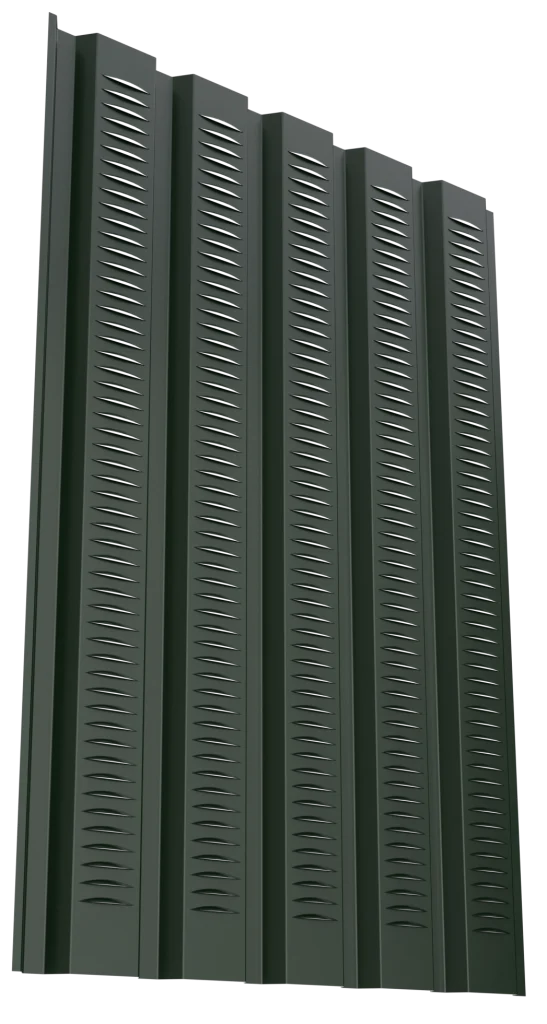
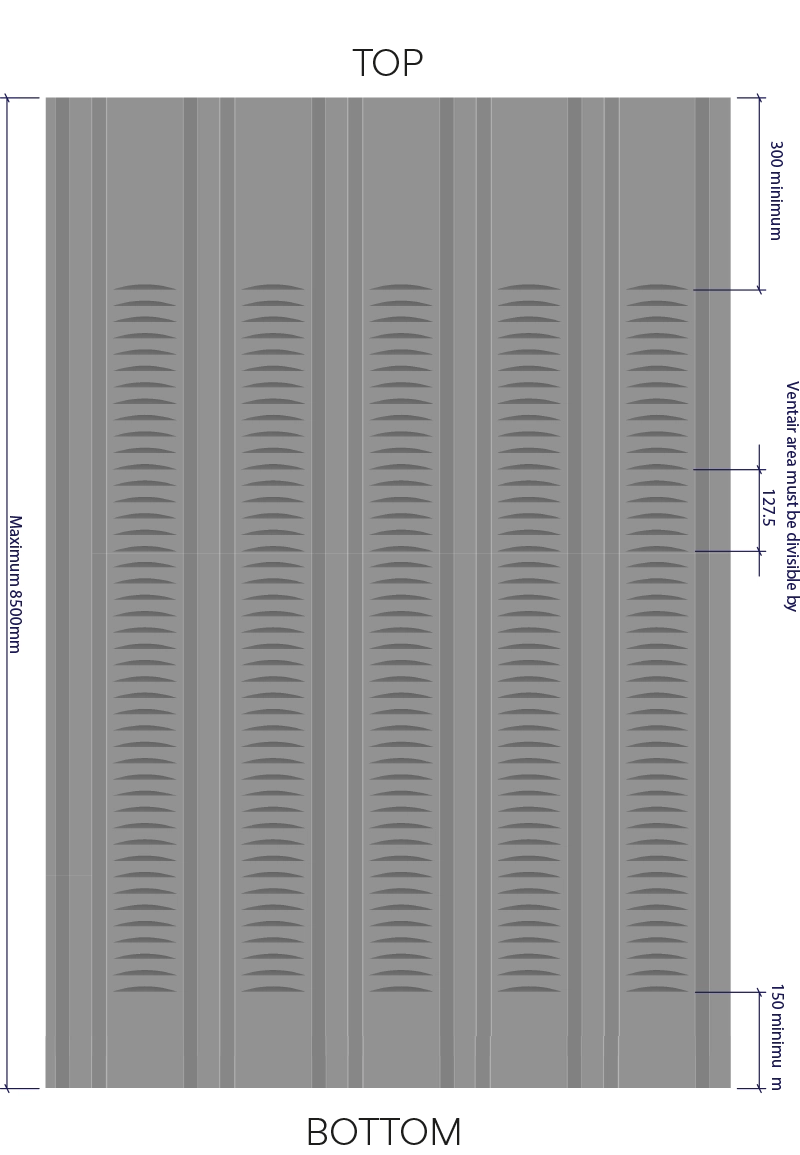
Thomas Panels and Profiles Ventair Sheeting is manufactured from the 1000-32 Reverse (No Ribs) profile, specifically modified with factory-stamped ventilating louvres to provide controlled airflow within wall cladding applications.
Designed to combine the strength and durability of roll-formed steel with effective passive ventilation, Ventair panels offer a practical solution where improved air movement and moisture control are required.
The integrated louvres are formed to encourage warm, moist air to rise and escape through the wall elevation, helping redirect airflow toward the apex of the building when used as part of a natural ventilation strategy. This promotes continuous air exchange without the need for large openings or mechanical ventilation systems.
Ventilation Performance
The louvre design increases airflow through the building envelope while maintaining weather protection. By introducing distributed ventilation points across the wall, Ventair sheeting can:
- Assist in reducing heat build-up within enclosed structures
- Help manage humidity and condensation levels
- Improve internal air quality through passive airflow
- Support natural ventilation systems without compromising cladding strength
VENTAIR
Non-Agricultural Applications
In addition to agricultural use, Ventair wall sheeting is suitable for industrial and commercial buildings where natural airflow is beneficial, such as:
Warehouses and storage facilities
Workshops and processing areas
Plant enclosures or service buildings
Covered external structures requiring discreet ventilation
VENTAIR
Agricultural Applications
Ventair sheeting is commonly used in agricultural wall cladding, particularly poultry and livestock buildings where warm, moisture-laden air must be managed effectively.
Positioned strategically within the wall elevation, the louvres help draw rising air upward toward ridge ventilation systems, contributing to a healthier internal environment and improved climate control.
Manufactured to integrate seamlessly with Thomas Panels and Profiles wall cladding systems, Ventair sheeting provides a durable, low-maintenance solution for introducing controlled ventilation while maintaining a consistent external appearance.
PERFORATED
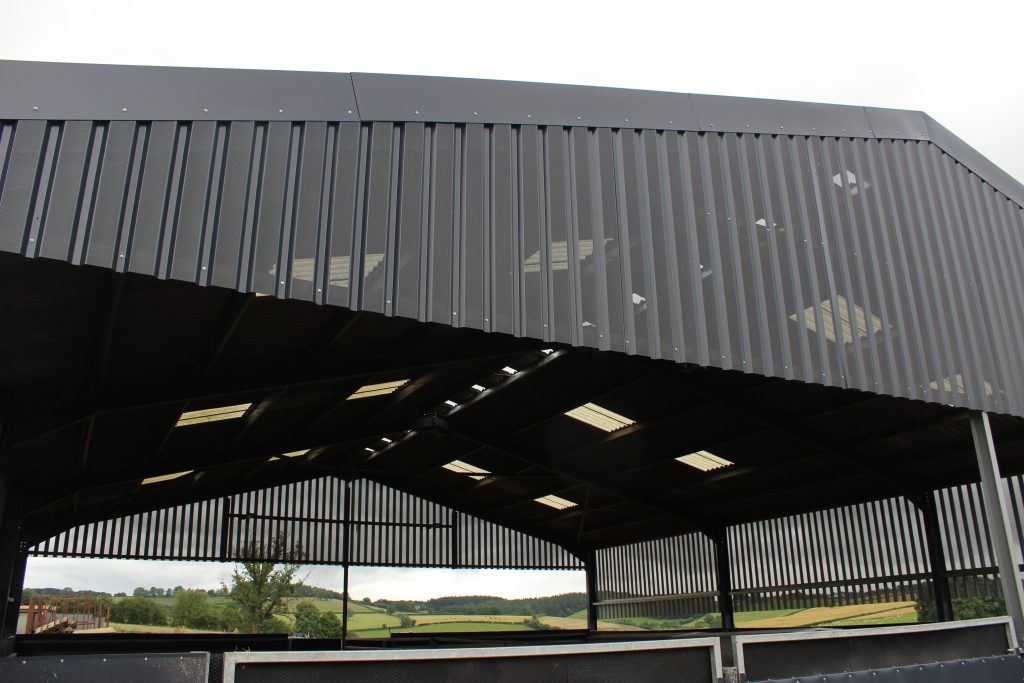
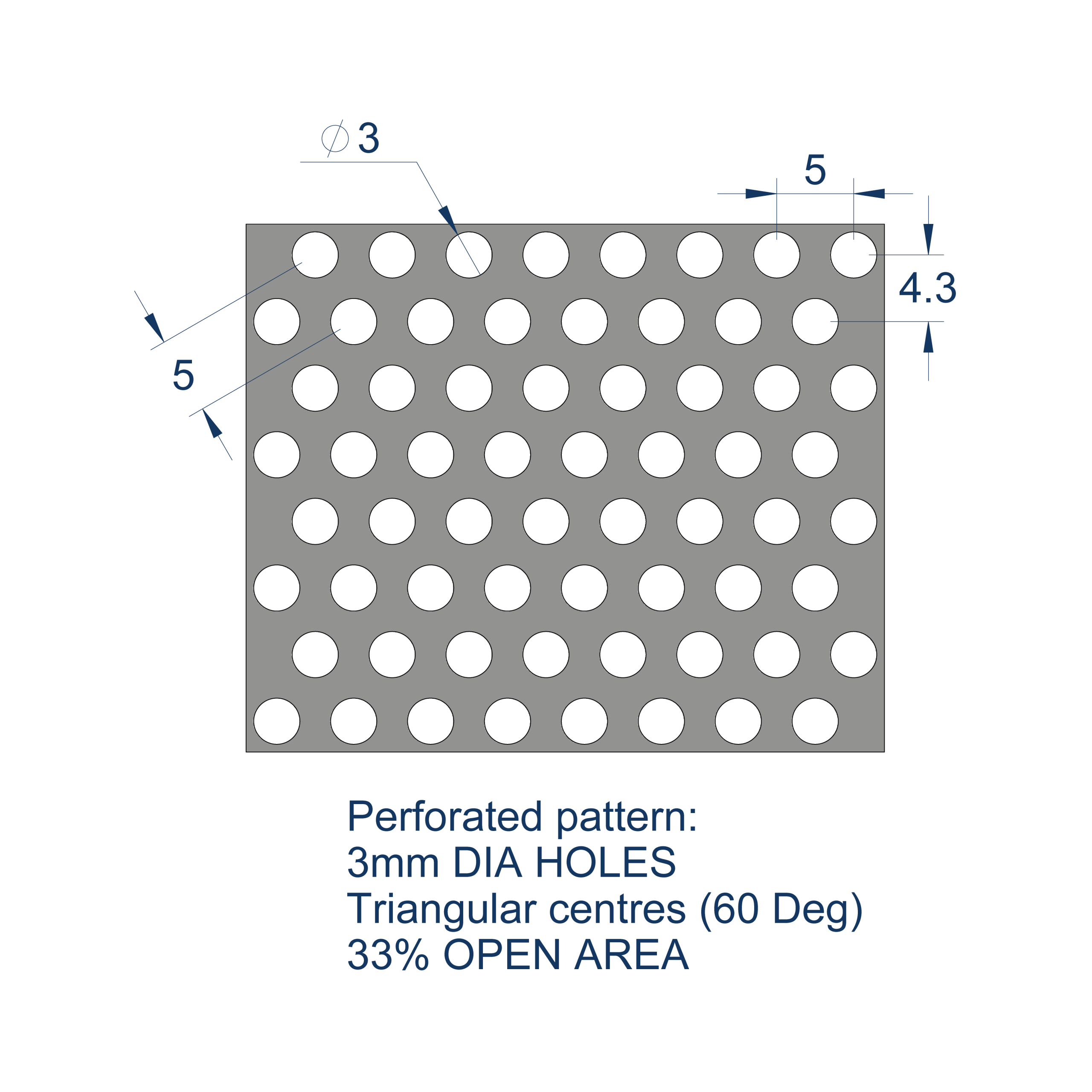
Thomas Panels and Profiles Perforated Sheeting is typically manufactured from the 1000/32 Reverse (No Ribs) profile, providing a clean, consistent appearance combined with effective ventilation.
The sheets are precision perforated to allow controlled airflow, making them ideal for applications requiring ventilation, air movement, or acoustic performance within wall cladding systems.
While the 1000/32 Reverse profile is standard, perforated sheeting can also be produced in alternative profiles and specifications to suit specific project requirements, subject to consultation with our team.
Designed to combine the strength and durability of roll-formed steel with controlled open-area performance, perforated sheeting provides an effective solution where ventilation, light transmission, and acoustic control are required.
The precision perforation pattern allows the free movement of air through the building envelope, helping to reduce moisture build-up and improve internal environmental conditions. In addition, the open area facilitates the introduction of natural daylight, reducing reliance on artificial lighting in suitable applications.
Perforated sheets can also contribute to acoustic performance by helping to diffuse and absorb sound when used in conjunction with suitable backing materials, making them ideal for applications where noise reduction is a consideration.
Ventilation Performance
The perforation pattern allows consistent airflow through the building envelope while maintaining the structural integrity of the cladding. By introducing a controlled open area across the sheet, perforated sheeting can:
- Assist in reducing heat build-up within enclosed structures
- Help manage humidity and condensation levels through natural air movement
- Improve internal air quality by promoting continuous passive ventilation
- Allow the introduction of natural daylight, reducing reliance on artificial lighting
- Contribute to acoustic performance when used with suitable backing materials
- Provide a balanced solution for ventilation, light, and sound control without compromising strength
PERFORATED
Agricultural Applications
Ventair sheeting is commonly used in agricultural wall cladding, particularly poultry and livestock buildings where warm, moisture-laden air must be managed effectively.
Positioned strategically within the wall elevation, the louvres help draw rising air upward toward ridge ventilation systems, contributing to a healthier internal environment and improved climate control.
Industrial & Commercial Applications
In industrial and commercial settings, perforated sheeting offers a versatile solution where a combination of ventilation, daylight, and acoustic performance is required.
- Facilitates passive airflow within warehouses and production facilities
- Introduces natural light, helping to reduce reliance on artificial lighting
- Can contribute to acoustic control when used with appropriate backing materials
- Ideal for plant rooms, screening, and façade applications
- Provides a durable, low-maintenance solution without compromising structural performance
ANTI-CON FLEECE
TPP Anticon is an economical alternative to insulated panels, where only condensation control is required.
TPP Anticon is a micro-fibre membrane that is bonded on to the underside of single skin sheets during the roll-forming process.
This ultra-absorbent membrane has been designed to control the condensation which forms when the air inside a building comes into contact with a colder surface, such as an uninsulated profiled sheet.
The condensate is absorbed and held in the membrane until the ambient temperature exceeds dew point, at which time it is released back into the air in the form of water vapour.