28 September 2026
For most stable and barn builds, steel profiled sheeting is the best roofing choice. It costs less over the building’s life than felt or tiled alternatives, most teams can install it quickly, and it comes in profiles and coatings suited to agricultural exposure.
Corrugated sheets suit traditional farm buildings, box profile suits a more contemporary finish, and tile-effect steel suits briefs that call for a pantile look without the weight or cost of real tiles.
For anyone pricing and building agricultural or equestrian structures, the roof specification is one of the key decisions.
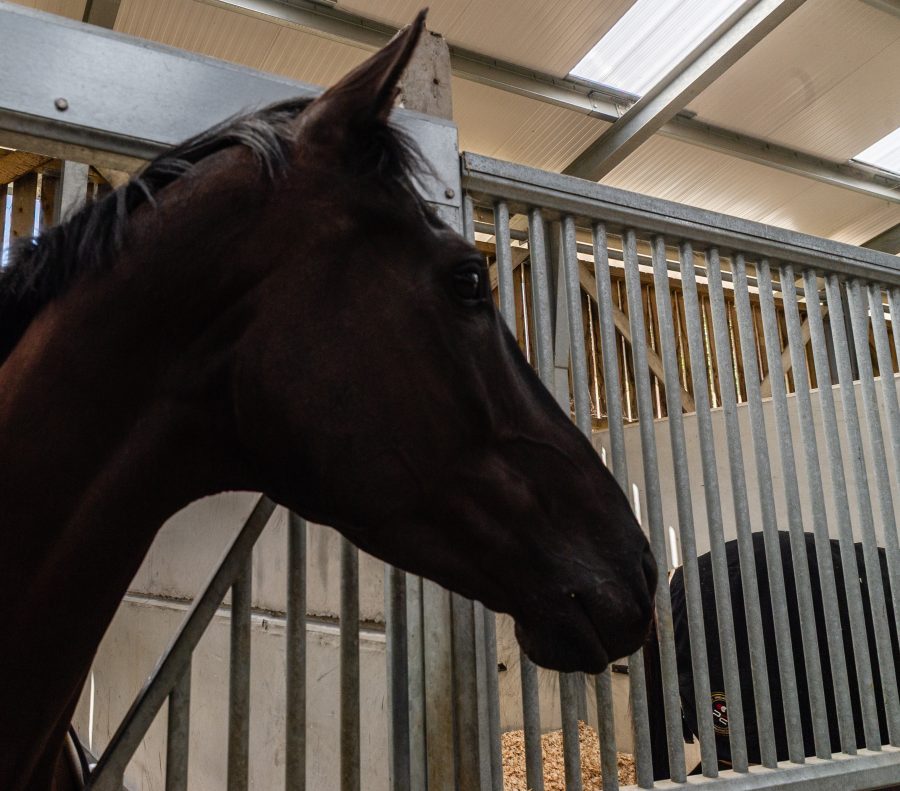
Stable and barn roofs face a specific set of demands. Spans tend to be wide. Sites are often exposed, with high wind and rain loading in many regions. End clients also judge the build partly on animal welfare outcomes: steady internal temperatures, dry bedding, low noise from rain impact. That combination means the roofing decision on an equestrian build carries more risk than a straightforward domestic re-roof.
This guide runs through the main roofing options for stable and barn projects, the trade-offs between them, and where our range fits at each stage.
For agricultural buildings generally, and stable blocks specifically, steel profiled sheet is usually where a specification starts. It’s weather-resistant across a wide range of exposure conditions, available in a broad spread of profiles and finishes, and most teams can install it at pace. Over the life of the building it tends to work out considerably more cost-effective than tiled or bitumen alternatives.
Corrugated profiles give the traditional wavy profile associated with agricultural buildings. Most installers know it well, and it reads as the expected finish on a timber-framed stable block, particularly where it’s replacing an existing corrugated roof or matching neighbouring farm buildings.
Box profile sheets give a squarer, more contemporary line with strong water run-off. It suits a stable that forms part of a mixed agricultural and residential development and needs to sit comfortably alongside a more modern main building.
ClickSeam, our standing seam system, gives the cleanest roofline of the three. It tends to get specified where appearance carries more weight in the brief, such as a stable block visible from a main house or a development with planning conditions on external finish.
Sheet thickness is also worth considering. Thicker sheets carry more load and hold up better over wider spans and on exposed sites, both common on stable and barn roofs. Thinner gauges suit vertical wall cladding, where the loading is different.
Have a look at our colours and coatings guide which sets out the finish options and their relative durability, from standard polyester paint through to premium long-life coatings.
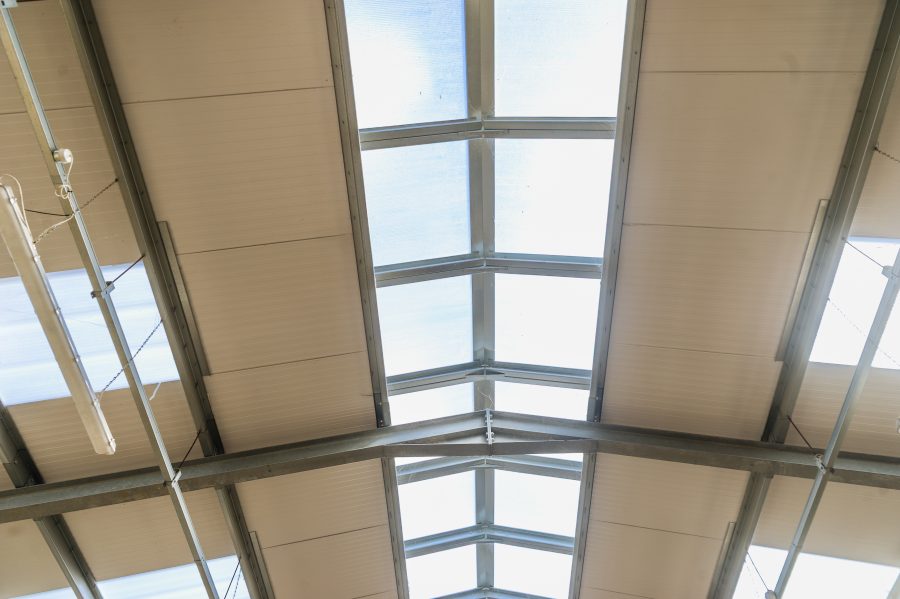
Natural light is a genuine welfare consideration in livestock buildings, not just a nice-to-have. Our GRP rooflights are manufactured to match the same profiles as our roof sheet ranges, so they install into the same run without a mismatched joint. They’re lightweight, straightforward to cut and fix on site, and the UV-stable gel coat means they don’t discolour or degrade faster than the surrounding sheet.
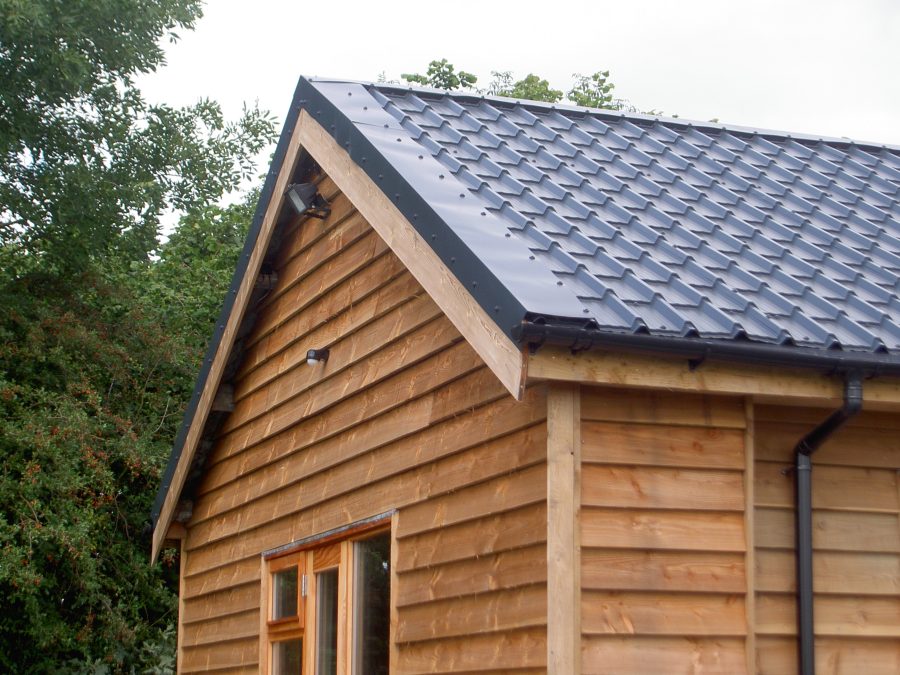
Sometimes the brief calls for a tile look, often to complement a period farmhouse or stone outbuildings nearby. A tile-effect steel sheet gives that appearance without the weight, cost or install time of clay or slate. Our Pantile 1100 profile is manufactured from steel and finished with a premium long-life coating built for exposed agricultural settings. It’s priced higher per square metre than standard corrugated or box profile, reflecting the more involved manufacturing process and coating. Against that, it cuts labour time well below individual tile-laying, and it’s significantly lighter overall than clay or slate tiles.
Pantile 1100 is manufactured from Z275 galvanised steel with an integrated capillary groove at the side laps, helping to prevent water ingress at the joints. It’s available in sheet lengths from 500mm up to 8 metres, and finished in a wide choice of colours across our coating ranges to match the surrounding building.
Felt or bitumen sheet gets proposed sometimes on lower-budget agricultural jobs, mainly on the strength of its low upfront cost. Felt roofing tends to have a shorter service life than steel, often needing repair or replacement within a decade, sometimes sooner, and performance drops off faster on sites with prolonged rain exposure, high wind loading, or overhanging trees shedding debris onto the roof.
| Coating | Typical lifespan | Commonly used on |
|---|---|---|
| Standard Polyester | Around 10 years before remedial work | Corrugated, Box profile |
| Textured Polyester | Around 10 years before remedial work | Tile-effect (Pantile 1100) |
| Plastisol | Longer-life finish | Corrugated, Box profile |
| TPP PUR 40 | Longest-life finish | ClickSeam |
The performance of any roof sheet depends on what it’s fixed to. Wider stable spans and exposed sites put real demands on the supporting structure, and this is where corners get cut on tighter budgets, usually to the detriment of the finished job. Our Z and C section purlins are cold-rolled to consistent tolerances, giving a true, accurately spaced substrate to fix into, which affects installation speed as much as long-term weathertightness. Add correctly detailed flashings and trims at ridges, verges and abutments, plus fixings and ancillaries matched to the coating in use, and the package is complete, all from a single order.
What is the best roofing sheet for a stable?
Steel profiled sheet is generally the best option for stables, balancing cost, durability and weather resistance. Corrugated suits a traditional look, box profile suits a more contemporary finish, and tile-effect steel suits briefs that call for a traditional appearance.
Corrugated or box profile: which is better for a barn roof?
Corrugated is the more traditional choice and the one most people are familiar with, making it a common default for agricultural buildings. Box profile gives a squarer, more modern line with stronger water run-off, and suits builds where appearance is a bigger factor.
How long does felt roofing last on an agricultural building?
Felt or bitumen roofing typically lasts between 5 and 10 years depending on exposure, and often needs repair before that. Steel roofing sheet generally lasts significantly longer and needs less maintenance over the life of the building.
Do rooflights need to match the roof sheet profile?
Yes. Rooflights should be manufactured to the same profile as the surrounding roof sheet so they sit flush and seal properly. Mismatched profiles create a poor joint and a higher risk of leaks.
Is tile-effect steel roofing more expensive than corrugated?
Yes, tile-effect sheet costs more per square metre than standard corrugated or box profile, reflecting the coating and manufacturing process involved. It’s significantly lighter than clay or slate tiles overall, helping to reduce the load on the supporting structure compared with a traditional tiled roof.
What determines how long a steel roof lasts?
The coating applied to the sheet is the main factor, more so than the profile itself. Standard polyester finishes typically need attention within around 10 years and aren’t currently warrantied. Plastisol coatings are warrantied for up to 25–30 years, and our TPP PUR 40 coating, generally used on ClickSeam, is warrantied for up to 40 years.
We’ve supplied steel roofing and cladding systems into agricultural, industrial and domestic projects for over 30 years. Every coil carries full traceability from raw material through to finished sheet, and we hold or make to order a wide range of colour, gauge and finish.
If you’ve got a stable, barn or wider agricultural build coming up, browse our full profiled sheet range, take a look at recent case studies, or get in touch with the team to talk through profiles, quantities and lead times for your project.